

Menorcan Food: The Traditional Dishes You Must Try

When we picture a holiday in Menorca, turquoise coves are usually the first thing that comes to mind. But there’s another, equally authentic way to get to know the island: sitting down at the table. Menorcan food tells a story of fishermen, farmers and centuries of British and French rule that you can taste in every bite, from the cheese to the drink in your glass. If you want to know what to eat on your next trip, here’s the full guide, with products you won’t find anywhere else.
Why is Menorcan food so different?
Menorca is the flattest, windiest island in the Balearics, with a landscape of pastures, dry-stone walls and holm oak woods quite unlike neighbouring Mallorca. That geography explains why dairy farming and cheese carry so much weight in its cuisine, compared to the olive oil and almonds that dominate the other island. Add to that a very particular history: between 1713 and 1802, Menorca changed hands several times between the British, the French and the Spanish, and each occupation left its mark on the kitchen. The gin still distilled today in Maó, or the legend that places the birth of mayonnaise in that same town, are good proof of it. The result is a mixed, simple cuisine full of character, closely tied to seasonal produce: fish and seafood along the coast, meat and cheese inland, and vegetables from farms scattered across the island make up a pantry that’s remarkably varied for its size.
Traditional Menorcan dishes you have to try
Menorcan cooking blends produce from the sea and from the “payés” countryside. This table sums up the most representative dishes, what they are, and the best time to try them:
| Dish | What it is | When or where to try it |
|---|---|---|
| Caldereta de langosta | Lobster stew cooked with a sofrito, served with toasted bread | Year-round, especially in the north of the island (Fornells) |
| Oliaigua | Farmhouse soup made from water, olive oil and aromatic herbs, enriched with vegetables | Warmer months, served warm or cold |
| Sepia amb fesols | Fresh cuttlefish stewed with peas or tender beans, depending on the household recipe | Year-round, a classic home-style dish |
| Stuffed aubergine | Baked aubergine filled with its own flesh mixed with meat or fish | Summer and autumn, with the vegetable-garden harvest |
| Arròs de la terra | Soupy rice with vegetables and farmhouse meat | Home cooking, year-round |
| Pastissets | Flower-shaped butter pastries dusted with icing sugar | Festive baking, mostly in autumn and winter |
Mahón-Menorca cheese, the island’s Protected Designation of Origin
No look at Menorcan food would be complete without its cheese. Mahón-Menorca cheese has held Protected Designation of Origin status since 1985 — one of the oldest in Spain — and is made from the milk of cows raised on the island. It comes in three ageing stages — tierno (young), semicurado (semi-cured) and curado (cured) — plus an extra-mature version known as “vell”, with a much more intense flavour. Its square shape and orange rind, which deepens with age, make it easy to recognise on any table, whether eaten on its own, with quince paste, or grated over pasta.
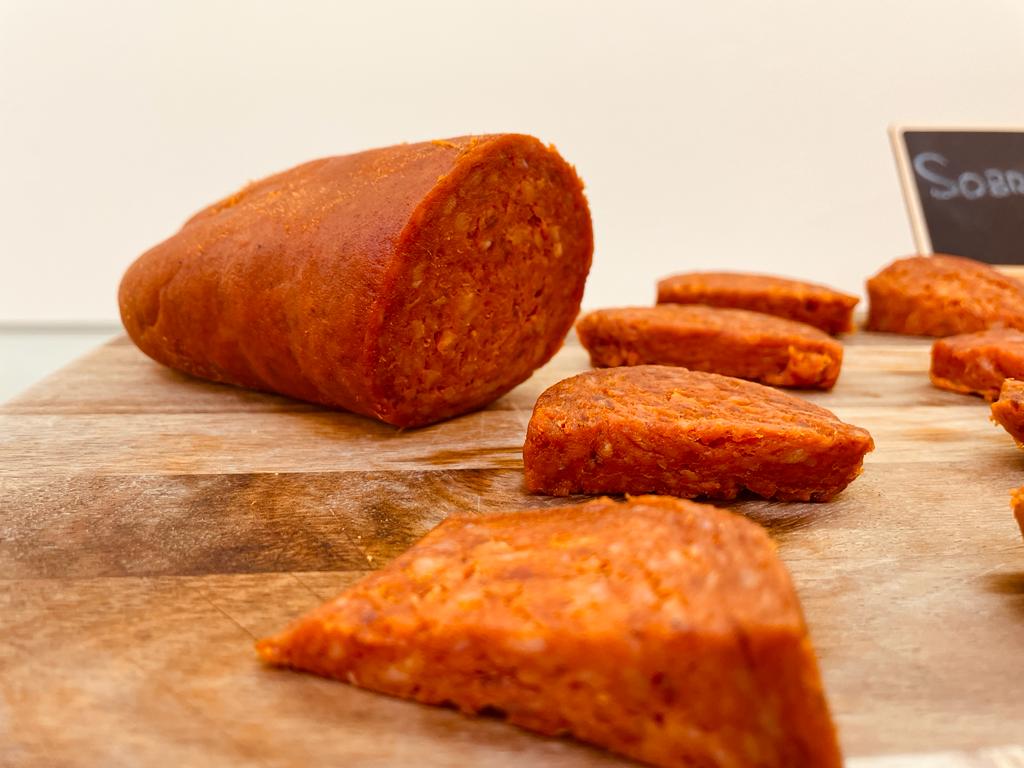
That flavour owes a lot to the landscape: the whole of Menorca has been a UNESCO Biosphere Reserve since 1993, and it’s precisely those natural pastures, tended for generations, that feed the island’s cattle. The cheese is often paired with Menorcan sobrassada, milder and less spicy than the Mallorcan version, spread on freshly baked bread or used as the base for stews and sauces. Some of the island’s cheese-making farms open their doors to visitors for a look at the process and a guided tasting — a great way to round off a visit with more than just a photo.
What is pomada, and why do Menorcans drink it?
Pomada is a mix of one part gin to two parts lemonade, and it’s the drink most closely tied to the island’s local festivals. It dates back to the British occupation of the 18th century, when sailors brought their taste for gin to the island and distilling began locally; today, the Xoriguer distillery, right by the port of Maó, still makes it using the traditional method. You’ll find pomada served ice-cold, often as a slushy, at the patron saint festivals held in every town between June and September, led by the “caixers” — the horsemen who take part in the traditional equestrian displays — though it’s just as popular on any terrace throughout summer as an aperitif.
A dish with a legend: mayonnaise, born in Maó
Few sauces have as disputed an origin as mayonnaise. The most widespread version places its birth in 1756, when the Duke of Richelieu captured Fort Sant Felip in Maó during the Seven Years’ War: his cooks, lacking cream for a planned sauce, are said to have improvised with egg and oil, adapting the local all-i-oli. True or not, the legend has turned Maó into a food destination in its own right, and it’s not unusual to hear the story told with pride in the town’s restaurants and shops.
Where and how to enjoy Menorcan food at its best
If you’re staying in a villa with a private pool or an apartment with a fully equipped kitchen, make the most of the weekly markets in the inland villages to buy cheese, sobrassada and vegetables straight from the producer and cook like a local yourself. If you’d rather eat out, family-run places away from the busiest tourist spots tend to serve the most authentic cooking, with menus that change with whatever the market has that day. Just bear in mind that outside peak season, many inland restaurants cut back their opening days, so it’s worth checking ahead before you make the trip.
Every part of the island has its own culinary character. In Maó you’ll find the birthplace of gin and mayonnaise, with the harbour as its heart; in Ciutadella, markets and cellars steeped in seafaring tradition; and in Sant Lluís, one of the areas with the most farmhouses and vegetable gardens in the south of the island. Looking to plan the rest of your trip too? Our guide to the best beaches in Menorca is a great place to start combining sea, villages and good food.
Frequently asked questions
What is the most typical dish in Menorca?
Caldereta de langosta (lobster stew) is, without question, the island’s most iconic dish. It started out as a fisherman’s meal and is now a signature dish in restaurants in Fornells and along the whole north coast. It’s served as a stew, with the lobster whole or cut into pieces, always alongside toasted bread.
What cheese is Menorca known for?
Mahón-Menorca cheese, which has held Protected Designation of Origin status since 1985. It’s made from cow’s milk and comes in young, semi-cured, cured and extra-mature (“vell”) varieties, each with its own flavour and texture.
What is Menorcan pomada?
It’s a mix of Xoriguer gin and lemonade, the most popular drink at the island’s patron saint festivals between June and September. It dates back to the British presence in the 18th century and is still distilled by hand near the port of Maó.
How is Menorcan sobrassada different from the Mallorcan kind?
Menorcan sobrassada is generally milder and less spicy than the Mallorcan version. It’s a cured, spreadable sausage traditionally eaten on freshly baked bread, or used as a base for stews and sauces.
Can you enjoy good Menorcan food outside peak season?
Yes — in fact, many hearty winter dishes, like sepia amb fesols or oliaigua, are often at their best between October and April, when restaurants have more time to give each dish proper care. It’s one more good reason to visit the island in the low season.
Ready to taste it all for yourself? Choose your accommodation in Menorca with the comfort of your own kitchen or close to the best local markets, and if you’re not sure which area suits you best, get in touch with us: we’ve been recommending the island’s best corners — and flavours — since 1992. Book ahead, especially in peak season, and let the island surprise your palate too.